Australia Day Poll: Record Support for January 26 Date
Record numbers of Australians are backing the continuation of Australia Day on January 26, according to a recent Resolve Political Monitor poll. The poll, which surveyed 1800 voters, found that 68 per cent support the current national day, a significant increase from the 47 per cent who backed it in January 2023.
Younger Generations Also Favor the Date
Interestingly, the support for January 26 extends to younger generations, including Gen Z. Among the 18-34 cohort, 55 per cent said they want to keep the current day, while only 24 per cent favored a change. This marks a shift from previous years, where younger demographics were more inclined towards changing the date.
Strongest Support Among Older Australians
Support for the current date is strongest among Australians over the age of 54, with 78 per cent backing January 26. This demographic has consistently shown strong support for maintaining the traditional date, reflecting a generational divide in the Australia Day debate.
Declining Support for Changing the Date
Support for changing the date has declined significantly, dropping from 39 per cent in January 2023 to just 16 per cent in the latest poll. The number of Australians who are neutral or undecided has remained relatively stable, indicating a clear shift in public opinion.
Reduced Attendance at Invasion Day Marches
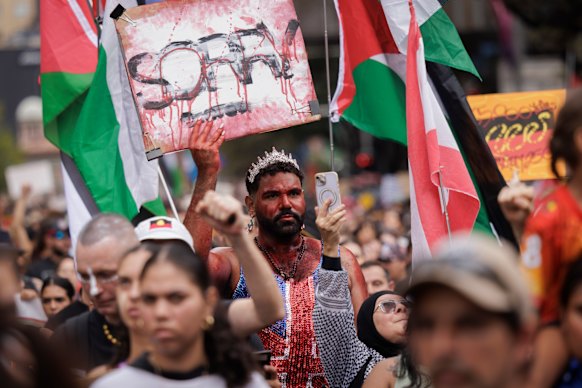
The estimated number of people attending the annual Invasion Day marches in major cities has also declined. In 2019, around 50,000 people marched in Melbourne and approximately 40,000 in Sydney. Last year, the crowds were estimated at half that size, with around 25,000 participants in each city.
Prime Minister Anthony Albanese Calls for Unity
Prime Minister Anthony Albanese has promoted the idea of Australia Day as an opportunity for unity. In a recent interview, he stated that the national day should celebrate “the three phases of Australia,” acknowledging the oldest continuous culture of Indigenous Australians, the arrival of the British, and the multicultural nature of modern Australia.
Albanese emphasized the importance of harmony and diversity, stating, “Our task is to be a microcosm for the entire world to show that harmony and diversity, that is our strength.”
Protests and Demonstrations Planned
Despite the growing support for the current date, protests and demonstrations are still planned for Australia Day. State authorities have approved plans for Invasion Day rallies in Melbourne and Sydney. NSW Police Commissioner Mal Lanyon has described the event as peaceful and has removed Hyde Park from the no-protest zones introduced after the Bondi killings on December 14.
Anti-Immigration Protests Also Scheduled
Anti-immigration protests organized by March for Australia will also take place in major cities. These marches, which have drawn criticism in the past for the involvement of neo-Nazi groups, are expected to proceed under new laws proscribing hate groups.
Australia Day as a Unifying Force
The Resolve Political Monitor poll also found that 66 per cent of respondents believe that having a national day adds to social cohesion. A further 74 per cent agreed with the idea of having a national day altogether. Resolve’s director Jim Reed noted, “Australians need mechanisms that enable them to come together and express unity given all the division, uncertainty, fragmentation and pressures of the last few years.”
Reed added, “What’s more surprising is the rise in support for keeping Australia Day: the fourth annual increase we’re recording in our polling. That’s driven mainly by younger people, who seem to be more aligned to the long weekend and positive associations with the day than the change campaigns of previous years.”
Conclusion
The ongoing debate surrounding Australia Day reflects the complex and evolving nature of Australian identity. While support for the current date has grown, the discussions around its significance and the need for unity continue to shape the national conversation. As Australia Day approaches, the country reflects on its history, diversity, and the values that define it.