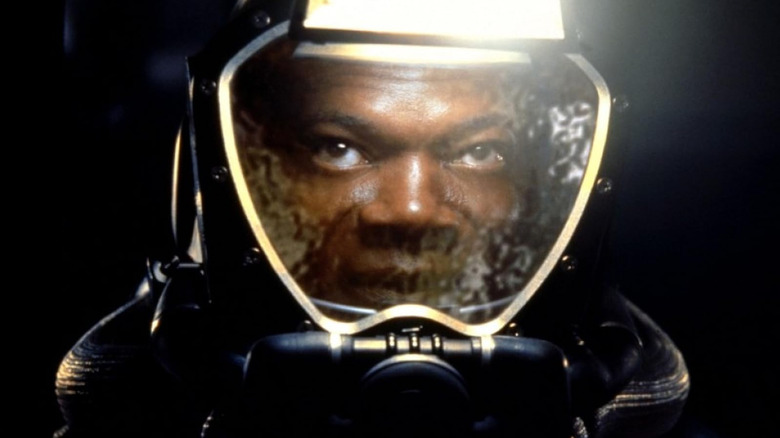
Dustin Hoffman in 'Sphere': Crichton's Biggest Flop Revisited
Dustin Hoffman, the chameleon-like actor whose career spans over six decades, has long been synonymous with transformative performances. From the autistic savant in Rain Man to the desperate salesman in Death of a Salesman, Hoffman's ability to embody complex characters has earned him two Academy Awards and a permanent place in cinematic history. Yet, not every project shines as brightly. In 1998, Hoffman plunged into the depths—literally—with Sphere, an underwater sci-fi thriller based on Michael Crichton's 1987 novel. Teaming up with Samuel L. Jackson and directed by Barry Levinson, the film promised cosmic intrigue but delivered a soggy disappointment. This article revisits Hoffman's role in what many consider Crichton's worst adaptation, while tracing the broader arc of his illustrious career.
Early Days and Breakthrough Roles
Born in 1937 in Los Angeles, Dustin Hoffman grew up in a family immersed in the arts—his mother was a jazz pianist, and his father worked in the furniture business. After studying at the Pasadena Playhouse, Hoffman honed his craft in New York theater scenes. His film debut came in 1967 with The Graduate, where he played the awkward Benjamin Braddock, seduced by an older woman in Mike Nichols' iconic satire. The role catapulted him to stardom, earning an Oscar nomination and cementing his image as an everyman hero with neurotic depth.
Hoffman's versatility shone in the 1970s. He tackled the eponymous cowboy in Midnight Cowboy (1969), sharing the screen with Jon Voight in a gritty tale of urban survival that won Best Picture. Then came Little Big Man (1970), where he aged from 17 to 121 as a white man raised by Native Americans, showcasing his physical and emotional range. By the decade's end, Kramer vs. Kramer (1979) delivered his first Oscar for portraying a divorced father navigating custody battles—a raw, heartfelt performance that resonated with audiences amid shifting family dynamics.
The 1980s and 1990s: Versatility Meets Blockbuster Ambition
The 1980s saw Hoffman diversify into comedy and drama. In Tootsie (1982), he donned drag as an out-of-work actor, blending humor with sharp social commentary on gender roles—another Oscar nod. Ishtar (1987) was a notorious flop, but it highlighted his willingness to take risks. Teaming with Levinson for Rain Man (1988) was a masterstroke; as Raymond Babbitt, the autistic brother, Hoffman humanized a challenging character, winning his second Oscar and grossing over $350 million worldwide.
Entering the 1990s, Hoffman explored darker territories. Wag the Dog (1997), again with Levinson, satirized media manipulation in politics—a prescient film that paired him brilliantly with Robert De Niro. But it was Sphere that tested his sci-fi chops. Adapted from Crichton's novel, the story follows a team investigating a futuristic spacecraft and mysterious sphere on the ocean floor. Hoffman plays Dr. Norman Johnson, a psychologist whose expertise in extraterrestrial communication unravels as the sphere manifests their fears into reality.
Why 'Sphere' Sank: A Critical Autopsy
Sphere arrived with high expectations. Fresh off Jurassic Park's success (1993), Crichton's name evoked thrills and wonder. The cast—Hoffman, Jackson as mathematician Harry Adams, Sharon Stone as biologist Beth Halpern—was star-studded. Yet, the film floundered. Budgeted at $80 million, it earned just $50 million domestically, earning a dismal 11% on Rotten Tomatoes.
Director Barry Levinson, hot from Wag the Dog, struggled to capture the novel's tension. Crichton's book blends hard sci-fi with psychological horror, echoing Stanisław Lem's Solaris in exploring human flaws amplified by alien forces. But Sphere opts for jump scares over introspection. Hoffman's performance, while committed, feels restrained amid clunky dialogue and uninspired visuals. The underwater sets, meant to evoke claustrophobia, come off as sterile, failing to build dread.
Critics lambasted the script's inconsistencies—why does the sphere only affect some characters? Jackson's role, often reduced to exposition, underutilized his charisma. Stone's arc ends abruptly, and Hoffman's Johnson shifts from bumbling expert to reluctant hero without much depth. As /Film noted, it's neither the pulpy fun of Congo (1995) nor the terror of The Abyss. Sphere marked a turning point; post-flop, Crichton adaptations like The 13th Warrior (1999) fizzled, stalling the brand until recent reboots like Westworld.
Levinson's track record with Crichton was mixed—Disclosure (1994), starring Michael Douglas and Demi Moore in an erotic thriller about workplace harassment, was campy but forgettable. Sphere amplified those issues, proving even talents like Hoffman couldn't salvage a misfired vision.
Later Career and Enduring Legacy
Undeterred by Sphere, Hoffman rebounded with voice work in Madagascar (2005) and a villainous turn in Mr. Magorium's Wonder Emporium (2007). He earned raves for Last Chance Harvey (2008), playing a lonely ad exec opposite Emma Thompson. In recent years, Hoffman has embraced streaming: a chilling role in The Meyerowitz Stories (2017) on Netflix showcased his dramatic prowess, while Curb Your Enthusiasm cameos highlight his comedic timing.
At 86, Hoffman's influence persists. He's inspired generations with his method-acting intensity and advocacy for actors' rights. Accolades include the AFI Life Achievement Award (1997) and a Cecil B. DeMille at the Golden Globes. Despite missteps like Sphere, his filmography—over 60 credits—remains a testament to reinvention.
The Hoffman Effect: Why He Still Matters
Hoffman's career reminds us Hollywood's highs and lows coexist. Sphere may be a footnote, but it underscores his range: from rain-soaked streets to ocean abysses. In an era of franchise fatigue, Hoffman's grounded authenticity feels timeless. As streaming revives Crichton tales, perhaps Sphere deserves a reevaluation—or at least appreciation for Hoffman's dive into the unknown.
Whether dissecting family bonds or facing cosmic horrors, Dustin Hoffman continues to illuminate the human condition, one flawed character at a time.