Hong Kong Jails Jimmy Lai for 20 Years on Security Charges
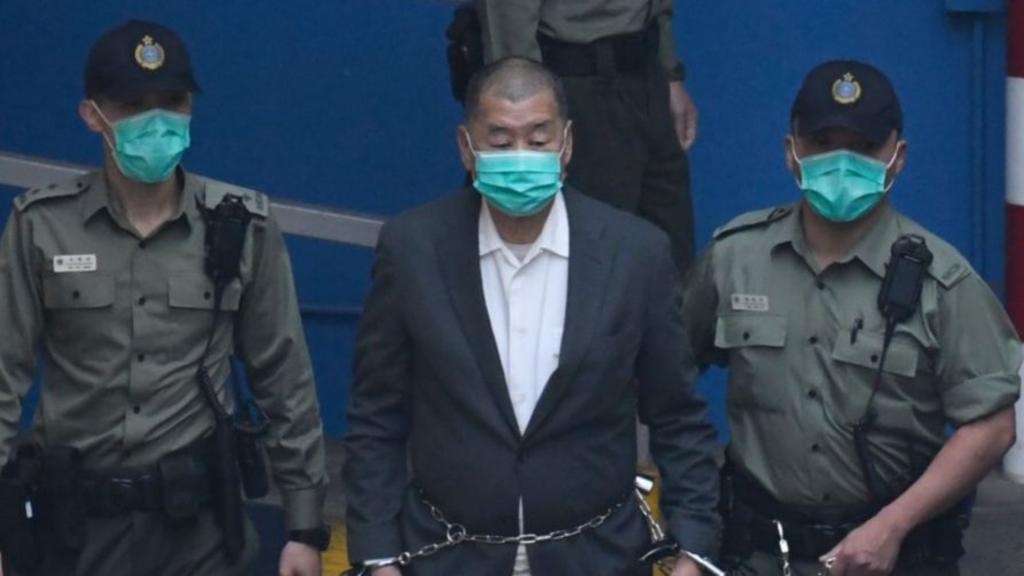
In a landmark ruling that has ignited international condemnation, a Hong Kong court has sentenced pro-democracy media tycoon Jimmy Lai to 20 years in prison for national security offenses. The 78-year-old British passport holder, once the driving force behind the city's vibrant independent press, was convicted in December following a high-profile trial that many critics have labeled a "show trial." This verdict marks the most severe penalty yet under Hong Kong's controversial national security law, enacted by Beijing in 2020 to curb dissent.
The Rise of Jimmy Lai and Apple Daily
Jimmy Lai's journey from rags to riches is the stuff of entrepreneurial legend. Born in mainland China, Lai fled to Hong Kong as a teenager and built a retail empire with Giordano, a casual clothing chain. But it was his foray into media that cemented his status as a thorn in Beijing's side. In 1995, he founded Apple Daily, a tabloid-style newspaper that quickly became a beacon for pro-democracy voices. With its bold headlines, satirical cartoons, and unfiltered criticism of the Chinese Communist Party, Apple Daily sold over 500,000 copies daily at its peak.
Lai, a devout Catholic and admirer of Western values, used the paper as a platform to champion Hong Kong's unique identity under the "one country, two systems" framework. During the 2014 Umbrella Movement and the 2019 anti-extradition protests, Apple Daily was at the forefront, amplifying calls for universal suffrage and autonomy. Beijing viewed this as sedition, accusing Lai of colluding with foreign forces to undermine national security—a charge he has vehemently denied, insisting his advocacy was rooted in Hong Kong's core values of rule of law and free expression.
Details of the Trial and Sentencing
The trial, which began in late 2023, centered on allegations that Lai conspired with foreign entities and published seditious articles in Apple Daily. Prosecutors presented evidence of editorials criticizing Beijing's policies and Lai's meetings with international figures like then-U.S. Vice President Mike Pence. Despite denying the charges, Lai represented himself for much of the proceedings after his legal team was barred or resigned under pressure.
On Monday, the court handed down the 20-year sentence, rejecting pleas for leniency based on Lai's age and health issues, including hypertension and diabetes. Judge Esther Chow stated that while Lai's conditions were noted, they did not warrant a reduced term, emphasizing the gravity of the offenses. In a parallel development, six former Apple Daily executives received sentences ranging from six years and nine months to 10 years. These included editor-in-chief Ryan Law Wai-kwong, executive editor-in-chief Lam Man-chung, and senior writer Fung Wai-kwong, all of whom pleaded guilty but did not assist the prosecution.
Others, like former associate publisher Chan Pui-man and chief executive Cheung Kim-hung, who cooperated as "accomplice witnesses," got lighter terms. Their convictions underscore the sweeping net cast by the security law, which has led to the shuttering of Apple Daily in 2021 after authorities raided its offices and froze assets.
Reactions from Authorities and Supporters
Hong Kong police chief Steve Li of the National Security Department defended the sentence as "appropriate," dismissing health concerns as "exaggerated." Beijing has long portrayed Lai as a traitor funded by Western interests to destabilize the city. Supporters, however, see him as a hero. Overnight queues formed outside the court by pro-democracy activists, some holding vigil with signs reading "Free Jimmy Lai."
Caoilfhionn Gallagher KC, leading Lai's international legal team, called the ruling a "final blow to the rule of law in Hong Kong." Barred from the local proceedings, Gallagher urged global leaders to demand Lai's release, highlighting his status as a "prisoner of conscience." The UK government, where Lai's family resides, has echoed these calls, with Foreign Secretary David Lammy labeling the sentence "deeply troubling." Human rights groups like Amnesty International decried it as politically motivated persecution.
Implications for Hong Kong and Beyond
This sentencing is more than a personal tragedy for Lai; it's a chilling signal in Hong Kong's post-1997 handover era. The national security law, imposed amid 2019's mass protests, has transformed the semi-autonomous region. Once a global financial hub boasting press freedom rankings on par with Western democracies, Hong Kong now ranks 140th on the World Press Freedom Index, per Reporters Without Borders.
Analysts argue the law has effectively silenced dissent, with over 280 arrests and dozens of media outlets closing. Apple Daily's demise left a void in independent journalism, forcing reporters into exile or self-censorship. For Beijing, it's a success story of restoring stability after years of unrest. Yet, for the international community, it raises alarms about eroding freedoms in a city pivotal to global trade.
Lai's case also spotlights the plight of dual nationals in China's orbit. As a British Overseas Citizen, his imprisonment tests UK-China relations, strained by issues like Uyghur rights and Taiwan tensions. With Lai's wife and children in London, calls for consular access and potential sanctions grow louder.
Global Outcry and Future Prospects
From Washington to Westminster, politicians have rallied. U.S. Congressman Chris Smith called Lai "the Nelson Mandela of Hong Kong," while the EU expressed "serious concerns." Petitions and protests in cities like London and New York demand his freedom. But with China dismissing foreign interference, Lai's appeal—expected soon—may offer slim hope.
At 78, a 20-year term could mean Lai spends his remaining years behind bars. His story, however, endures as a testament to resilience. As one supporter outside the court put it, "Jimmy Lai's voice can't be jailed—it's in all of us fighting for freedom." Whether this galvanizes further resistance or quells it remains to be seen, but one thing is clear: Hong Kong's battle for democracy is far from over.
This article is based on reports from BBC News and other verified sources as of the latest updates.