Paul Dacre Denies Knowledge in Prince Harry Privacy Case
In a dramatic courtroom showdown at London's High Court, former Daily Mail editor Paul Dacre has categorically denied any awareness of police bribes used to source stories about Prince Harry and other celebrities. The testimony, delivered on February 11, 2026, marks a pivotal moment in the ongoing privacy lawsuit filed by Prince Harry against Associated Newspapers Limited (ANL), the publisher behind the Daily Mail and Mail on Sunday.
Background of the Prince Harry vs. Daily Mail Lawsuit
The case stems from allegations that ANL engaged in unlawful information-gathering practices spanning from 1993 to 2011—precisely during Dacre's 26-year tenure as editor. Prince Harry, alongside high-profile figures like Elton John, Elizabeth Hurley, Sadie Frost, and three others, accuses the publisher of employing private investigators to bribe police officers and access confidential details about their private lives.
At the heart of the claims is a pattern of 'criminal activity,' including phone hacking and the misuse of personal data. Prince Harry has been vocal about the intrusion, describing it last month in court as a 'betrayal of public trust' that has haunted his family for decades. The Duke of Sussex's involvement underscores his long-standing campaign against media overreach, which intensified after his mother's tragic death in 1997 amid intense paparazzi scrutiny.
This isn't Harry's first legal tussle with the press; he previously won a phone-hacking case against Mirror Group Newspapers in 2023, securing substantial damages. Now, with ANL in the crosshairs, the stakes are even higher, potentially reshaping journalistic standards in the UK.
Key Claimants and Allegations
Elton John and David Furnish have claimed that ANL published stories about their family holidays sourced through illegal means, including surveillance. Elizabeth Hurley alleges similar invasions, while actors Sadie Frost and David Graham, along with Doreen Lawrence (mother of Stephen Lawrence), round out the group of seven claimants. Their combined suit seeks to expose what they call a 'systematic abuse' by tabloids, with evidence pointing to over 100 instances of wrongdoing.
Paul Dacre's Courtroom Testimony: A Measured Defense
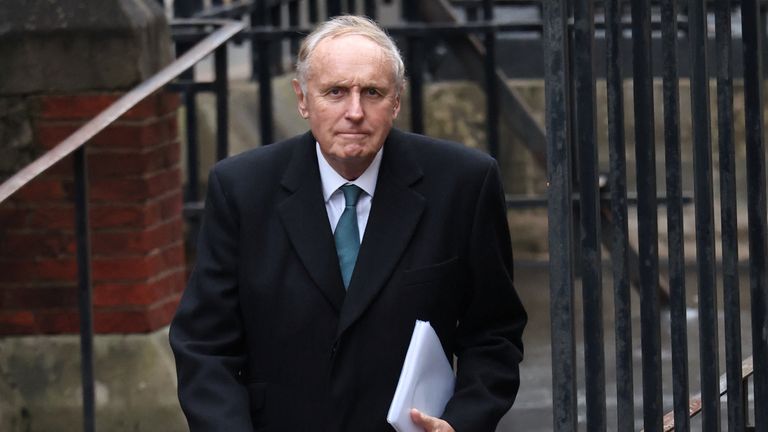
Dacre, who stepped down as editor in 2018 after transforming the Daily Mail into a global powerhouse, arrived at the High Court exuding confidence. Under questioning from Harry's lead counsel, David Sherborne KC, the 76-year-old journalism veteran maintained a composed demeanor, insisting he had no direct involvement in the day-to-day sourcing of stories.
'I categorically deny any knowledge of payments to police officers or unlawful practices,' Dacre stated firmly. He emphasized that as editor, he oversaw 'hourly rolling conferences' but delegated the verification of story origins to his team. 'I wouldn't have been involved in testing the provenance of 99% of the stories,' he explained, painting a picture of a hands-off approach to operational details.
One flashpoint was a 2005 story detailing Prince Harry's flight from the UK to the US with his then-girlfriend Chelsy Davy, complete with specifics like his seat number. Sherborne pressed Dacre on how such granular information could have been obtained legally. Dacre suggested airlines were once 'very open' about passenger details, drawing from his own reporting experience, but denied any insider knowledge of the article's true source.
The exchange grew tense when Sherborne accused Dacre of turning a blind eye to unethical methods. Dacre fired back, labeling the line of questioning as an attempt to 'smear the dead'—referring to deceased journalists implicated in past scandals. The judge intervened, expressing frustration with the lawyer's probing, which led to a brief adjournment.
Dacre's Portrayal: From Techno-Phobe to Reform Champion
In his witness statement, Dacre described himself as technologically 'antediluvian,' admitting he rarely used computers and relied on print-era instincts. This admission seemed aimed at distancing himself from modern surveillance tools allegedly used by investigators.
Yet, Dacre positioned himself as a guardian of ethics, recounting how he implemented reforms upon learning of dubious practices. 'If a story smelled of danger—potentially libellous or in breach of the Editors' Code—I would voice concerns immediately,' he said. He boasted of paying top salaries to journalists while enforcing a 'tough disciplinary regime,' suggesting a balanced leadership that prioritized accuracy over sensationalism.
Court observers noted Dacre's ability to shift personas: the no-nonsense editor, the outdated tech skeptic, and the self-proclaimed cleaner-upper of Fleet Street's excesses. Despite Sherborne's aggressive tactics, Dacre remained unflappable, refusing to preempt his former colleagues' upcoming testimonies.
Analysis: Did Harry's Team Land a Punch?
Arts and entertainment correspondent Katie Spencer, covering the trial for Sky News, described Dacre's appearance as 'measured and controlled.' While claimants hoped to expose the underbelly of tabloid journalism through the polarizing figure—who many associate with aggressive reporting—little new ground was broken.
Sherborne's strategy faltered, with Dacre deftly deflecting accusations and highlighting his editorial oversight without admitting fault. 'This was the claimants' big moment, but they learned very little,' Spencer analyzed. The lack of fireworks may frustrate Harry, who has framed the case as a fight for privacy rights against an unchecked media machine.
Broader implications loom large. If successful, the lawsuit could lead to stricter regulations on data sourcing, echoing the Leveson Inquiry's 2012 recommendations. For Dacre, whose influence shaped British media for decades, the testimony reinforces his legacy as a defender of press freedom—albeit one under siege.
What's Next in the Trial?
The case continues with evidence from former Daily Mail journalists, expected to delve deeper into operational practices. Prince Harry may return to the stand, building on his previous testimony where he detailed the emotional toll of media intrusions.
As the UK grapples with balancing press liberty and personal privacy, this trial serves as a litmus test. For readers worldwide, it highlights the enduring clash between celebrity lives and the relentless pursuit of headlines.
Stay tuned to Everythiiing.com for updates on this unfolding saga. The battle between Prince Harry and the Daily Mail isn't just legal—it's a defining moment for modern journalism.