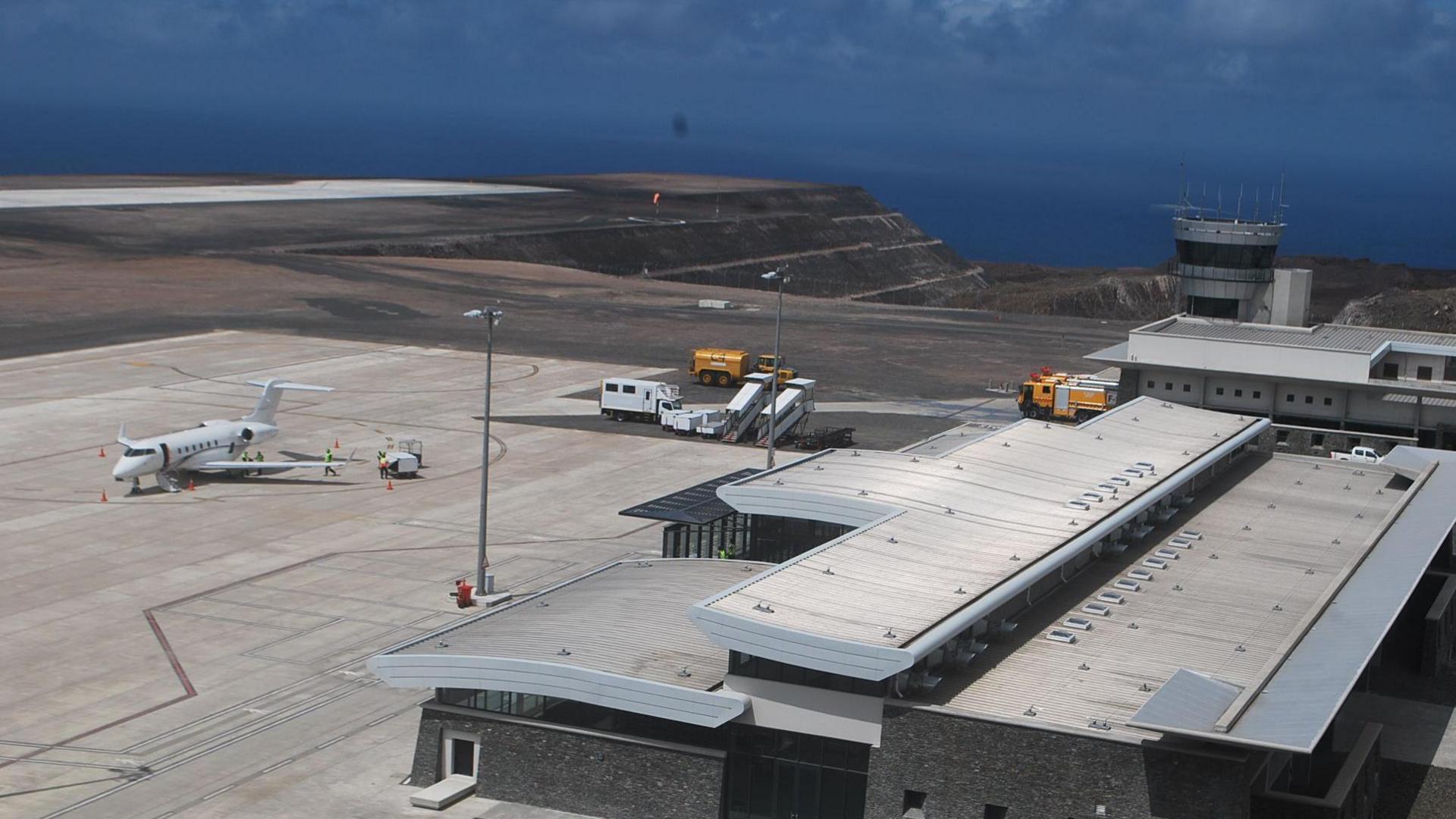
St Helena Airport Closes Over Critical Fire Safety Fears
In a blow to one of the world's most isolated communities, the sole airport on St Helena—a remote British overseas territory in the South Atlantic—has been forced to close due to serious fire safety violations. The shutdown, announced just hours ago, stems from faulty fire engines that fail to meet international standards, leaving around 4,000 residents and visitors stranded with no quick way off the island.
Background on the Crisis
St Helena, located 1,200 miles off the southwest coast of Africa, is a speck of land roughly the size of Jersey, with a population that could fit into a small town. Accessible primarily by air since the airport's opening in 2016, the island has long symbolized remoteness—famously the exile spot for Napoleon Bonaparte in the 19th century. But today, it's grappling with modern isolation woes.
The airport, funded by the UK at a staggering £285 million, was meant to boost tourism and connectivity. Instead, it's been plagued by issues from the start. A 2016 parliamentary review slammed the project as a failure for British taxpayers, citing construction delays and operational headaches like wind shear that often grounds flights. Critics dubbed it a 'white elephant,' and now, this latest incident threatens to reinforce that label.
Details of the Safety Breach
Local authorities declared a major incident after routine checks revealed that the airport's fire engines had developed critical faults. According to Governor Nigel Phillips, speaking at a press conference, the vehicles could no longer provide adequate fire cover. 'We have insufficient fire suppressant that could be put onto an aircraft if needed,' he explained, emphasizing the risk to passenger safety.
While small aircraft for medical evacuations are still allowed, all commercial passenger flights are canceled until at least February 20. The UK government has been notified, and a specialist team is on-site to address the problems and expedite reopening.
Human Impact: Stories from the Stranded
The closure hits hard in a place where sea voyages to the mainland take up to a week. For residents, it's a disruption to work, family, and healthcare. Tourists, drawn by the island's pristine beaches, hiking trails, and unique wildlife, face mounting bills for extended stays.
Take Hugh, a Gloucestershire resident who arrived in January for a three-week family visit with his girlfriend. Their return flight to Johannesburg and then the UK is set for February 15, but uncertainty looms. 'We haven't heard from Airlink or British Airways yet,' Hugh shared. 'New flights could cost us £3,000, plus insurance extensions and Johannesburg hotels. With our mortgage and the cost-of-living crisis, it's overwhelming. We've used up our leave—now it might be unpaid.'
Across the ocean in Cape Town, American couple Joe and Cheryl Tingler are dealing with heartbreak compounded by logistics. They flew from Florida to return Cheryl's father's ashes to St Helena, honoring his wish after his 2024 death from prostate cancer. Learning of the closure upon arrival, Cheryl said, 'We planned this for my dad, who lived with us in his final year. Now, we're stuck waiting for accommodation help from our agency. It's devastating.'
These personal tales underscore the ripple effects. The island's government urges affected travelers to contact airlines and insurers, but options are limited in such a far-flung location.
Economic and Tourism Fallout
Tourism has been a lifeline for St Helena's economy since the airport opened, drawing adventurers to its volcanic landscapes and endemic species like the wirebird bird. Local businesses rely on visitors for revenue, and this shutdown could dent that momentum.
Compounding the timing is the upcoming 'world's most remote marathon' on February 22, which was set to spotlight the island globally. Organizers haven't commented yet, but cancellations or delays seem likely, potentially scaring off future tourists wary of travel risks.
St Helena's broader challenges aren't new. As part of the UK overseas territories alongside Ascension and Tristan da Cunha, it struggles with funding and infrastructure. A 2021 BBC feature highlighted hopes for more visitors, while a 2023 profile noted ongoing efforts to modernize. Yet, events like this teen sprinter's 5,000-mile trek for the Island Games in 2025 show the community's resilience amid adversity.
Government Response and Path Forward
The local administration is working around the clock with UK experts to repair or replace the fire engines. In the interim, limited shipping options exist, but they're slow and weather-dependent. Officials are also exploring contingency plans for essential supplies, as the island imports most goods.
For the UK, this incident reignites questions about oversight of distant territories. The Public Accounts Committee previously criticized the airport's viability, and renewed scrutiny could follow. Prime Minister's questions in Parliament might address support for stranded Brits.
Why St Helena Matters
Beyond the headlines, St Helena represents the quirks of empire in the 21st century—a British foothold in a globalized world where distance still dictates destiny. Its closure isn't just a logistical nightmare; it's a reminder of how fragile connections can be for the planet's forgotten corners.
As repairs progress, the island holds its breath. Will the airport reopen in time to salvage the marathon and restore faith in this aerial lifeline? For now, St Helena's 4,000 souls—and those longing to reach them—wait in suspense, embodying the true cost of remoteness.
(Word count: 752)