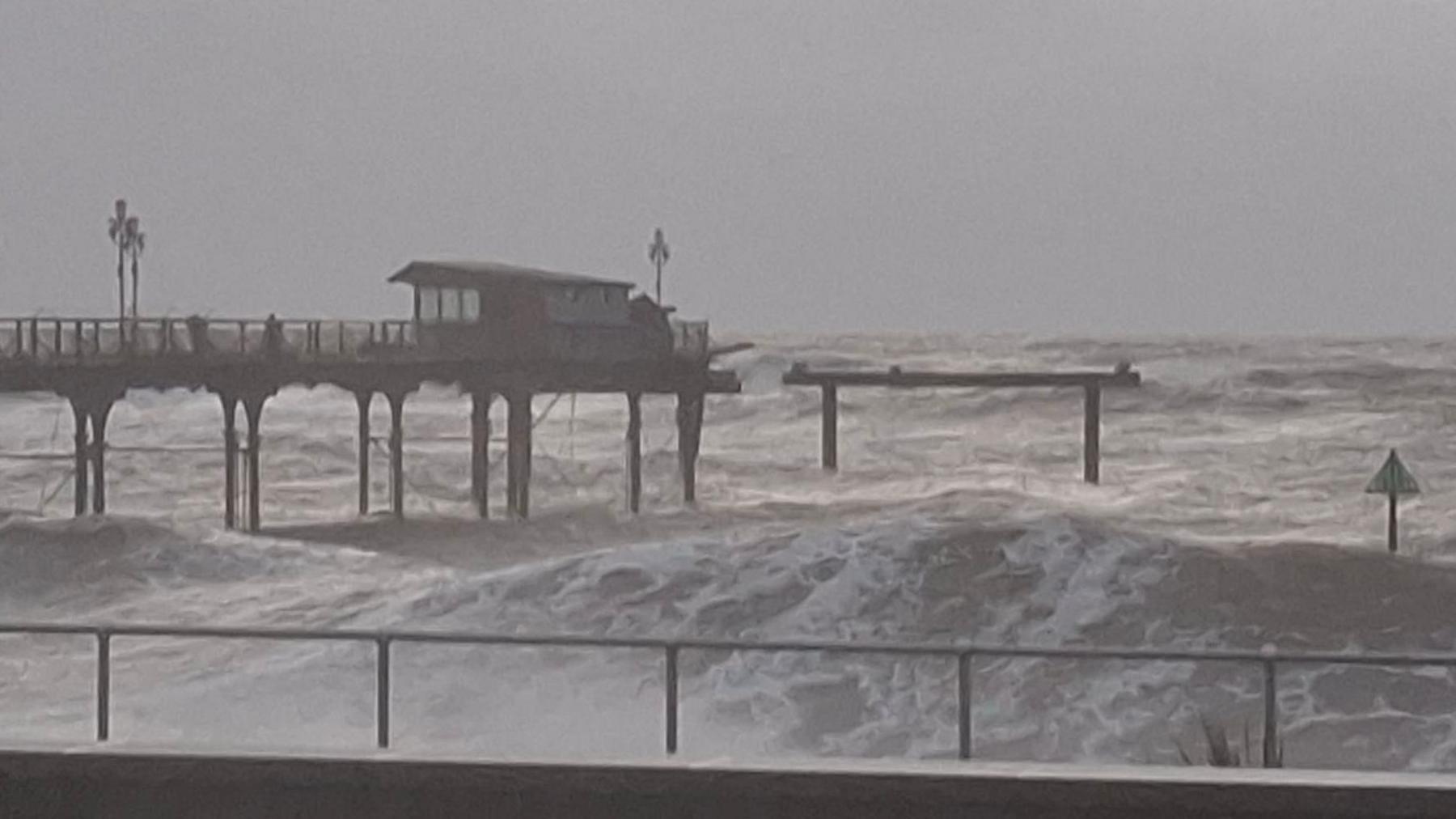
Teignmouth Pier Collapses Amid Devastating Storm Ingrid
The historic Teignmouth Grand Pier has suffered significant damage as Storm Ingrid battered the South West coast, with part of the structure washed away into the sea. The incident has left local residents and authorities concerned about the future of the iconic pier, which opened in 1867 and has stood resilient through many years of weather and historical events.
Historic Pier Loses Part of Its Structure
Teignmouth mayor Cate Williams expressed sadness at the sight of the pier's partial collapse. "It has lost part of the pier structure itself, that has dissolved and gone away into the sea," she said. "It's an old pier and it was needing some attention and I suppose age and wear and tear has taken its toll. It has survived many weather conditions as well as world wars. It's sad when you look at it now to see some of it now missing."
Age and Wear Contribute to Damage
The 156-year-old pier, a beloved landmark in Teignmouth, had been showing signs of aging in recent years. While it had withstood numerous storms and historical challenges, this recent event has raised questions about its long-term viability. The mayor noted that while the pier was due for maintenance, the extent of the damage was still shocking to the community.
Storm Ingrid Ravages South West Coast
Storm Ingrid, which brought intense winds and waves to Devon and Cornwall, has caused widespread disruption across the region. The Met Office had issued a yellow warning for rain, while the Environment Agency reported flood warnings along the south Devon and south Cornwall coasts. The storm has tested coastal infrastructure to its limits.
Sea Wall Collapse at Dawlish
Just miles away from Teignmouth, the sea wall protecting the railway line at Dawlish has partially collapsed, leading to suspension of train services between Exeter St Davids and Plymouth. A resident described the scene as "very dramatic," noting that "part of the wall protecting the rail line had just crumbled."
Network Rail issued a black alert, its highest warning level, as 12-foot waves hammered the sea wall at Dawlish. This marks only the second time such an alert has been issued since a storm destroyed sections of the track around Dawlish in February 2014.
Rail Services Suspended Amid Cleanup
Great Western Railway announced that services would remain suspended until at least 18:00 GMT, with inspections required once the storm subsided. A spokesman for GWR explained that "there's been a significant amount of debris that the sea has thrown onto the track that will need to be cleared before we can run trains safely."
Passengers have been advised to avoid rail travel, with tickets remaining valid for travel on Sunday. The firm warned that if normal numbers of people attempt to travel, waiting times could be extensive due to limited bus replacement services.
Broader Impact Across the Region
The effects of Storm Ingrid have been felt across Devon and Cornwall. Rail services have also been cancelled between Par and Newquay and between Liskeard and Looe due to flooding. Additionally, trees have fallen across the region, with one incident blocking both lanes of the A377 near Lapford, according to Devon County Council.
Cornwall Council has warned that trees might still be weak or unstable following earlier storm activity, urging caution from residents and travelers alike.
Community Resilience Tested
Teignmouth's mayor described the town as having "taken a real battering" overnight into Saturday with "just wild" waves causing significant damage. The community is now grappling with the implications of losing part of its historic pier, which has been a focal point for tourism and local pride for over a century.
As cleanup and assessment efforts begin, questions arise about the future of the Teignmouth Grand Pier and what steps might be taken to either restore or adapt the structure to better withstand future storms. The incident serves as a stark reminder of the challenges coastal communities face in the face of increasingly severe weather events.
Looking Ahead: Recovery and Preparedness
Authorities are now focused on assessing the full extent of the damage and developing a recovery plan. For the Teignmouth Grand Pier, this will likely involve structural engineers determining whether restoration is feasible or if alternative solutions should be considered.
Meanwhile, the suspension of rail services highlights the vulnerability of coastal infrastructure to extreme weather. Network Rail and other agencies will be reviewing their preparedness measures and considering how to better protect essential transport links in the face of similar future storms.
As the South West begins to recover from Storm Ingrid's impact, the events in Teignmouth and Dawlish serve as a reminder of nature's power and the ongoing challenges of maintaining historic structures and critical infrastructure in coastal areas.