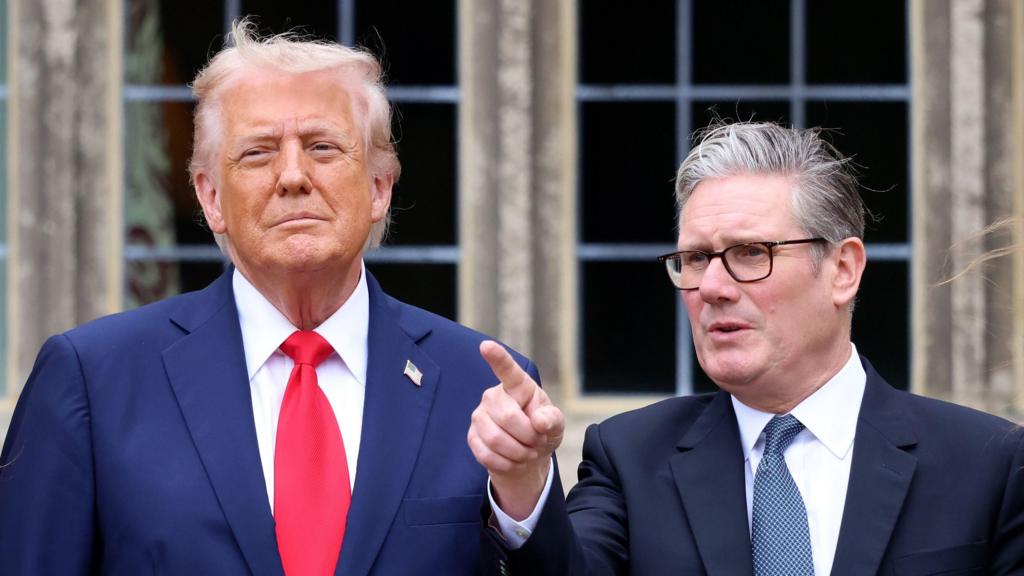
In a move that has sent shockwaves through capitals across Europe and beyond, former US President Donald Trump has escalated his long-standing interest in Greenland into a full-blown international crisis. Threatening severe tariffs against the UK, Denmark, and several key EU nations, Trump has made the “complete and total purchase of Greenland” a non-negotiable precondition for lifting the punitive measures.
The Unprecedented Tariff Threat
The ultimatum, delivered via public announcement, targets allied economies with a 10% tariff on all exports to the US, effective February 1st, escalating to a punishing 25% in June. The sole escape clause? A successful deal for US acquisition of Greenland. This aggressive linkage of a sovereign territory sale to international trade policy has left officials baffled and allies reeling.
International Condemnation Mounts
The reaction from leaders of affected nations has been swift and overwhelmingly negative. UK Prime Minister Sir Keir Starmer branded the tariff threat “completely wrong,” emphasizing that the future of Greenland is a matter for the Greenlanders and the Danes alone. Similarly, Denmark’s Foreign Minister, Lars Løkke Rasmussen, expressed surprise, noting the threat followed a recent “constructive meeting” between Danish and US officials.
The European Union leadership has also weighed in, with the Presidents of the European Council and Commission warning that such tariffs risk undermining crucial transatlantic relations and initiating a “dangerous downward spiral.” This diplomatic fallout suggests a significant deterioration in trust between Washington and its traditional partners.
Why Does Trump Want Greenland? The Strategic Calculus
Trump’s fixation on acquiring the vast, ice-covered territory of Greenland is not new, but the current leverage tactic—using crippling trade sanctions—is unprecedented. The stated reasons revolve primarily around strategic military advantage and competition with global rivals.
Geopolitical Choke Point
In his justification, Trump claimed that “world peace is at stake,” citing the perceived interest of China and Russia in controlling the island. Greenland’s location in the North Atlantic makes it a critical geopolitical choke point, offering unparalleled access to Arctic sea routes and surveillance capabilities. For the US military, control over Greenland translates directly into enhanced strategic positioning.
The 'Golden Dome' Defence System
Crucially, Trump stressed the necessity of Greenland’s control for the functionality of his proposed “Golden Dome” defence system, asserting that the system requires the island’s territory to operate at “maximum potential and efficiency.” While details of the 'Golden Dome' remain scarce, this suggests a direct link between territorial acquisition and advanced US national security infrastructure.
Economic and Resource Potential
Beyond military strategy, Greenland holds significant untapped economic potential. The island is rich in rare earth minerals, zinc, iron ore, and uranium—resources vital for modern technology and renewable energy infrastructure. As global supply chains face increasing scrutiny, securing a stable, sovereign source for these materials becomes a paramount national interest for any superpower.
Economic Fallout and Alliance Resilience
Economists are grappling with the real-world impact of these threats. While some observers might dismiss the threats as bluster, requiring a “Trump will Chicken Out” (TACO) scenario, the potential damage to trade is substantial. However, historical precedent, such as Canada’s response to previous US tariffs, suggests that allied nations can pivot. Canada, for instance, successfully redirected trade globally after facing US levies.
The deeper concern, as noted by economic commentators, lies not just in the tariff percentages but in the rationale. Publicly coercing allies into divesting sovereign territory challenges the foundational principles of international partnership and mutual respect. It raises serious questions globally about the predictability and stability of American decision-making processes.
Greenland's Voice: Sovereignty Demanded
Amidst the high-stakes diplomatic maneuvering, the residents of Greenland are making their stance clear. In the capital, Nuuk, citizens marched carrying banners proclaiming, “Greenland is for Greenlanders.” This local sentiment underscores the fundamental issue: the decision about Greenland’s future rests with its people and their relationship with Denmark, not with trade negotiations between Washington and Copenhagen.
As the February 1st deadline approaches, the world watches to see if this unparalleled threat will force a sale or, more likely, lead to a significant, damaging confrontation that tests the very limits of transatlantic solidarity.