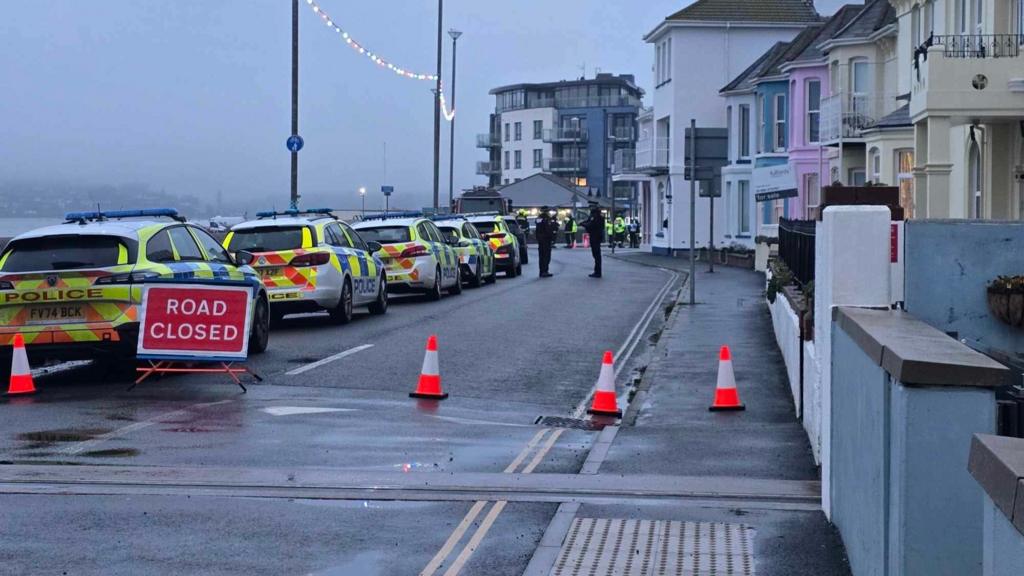
Exmouth and Plymouth are breathing a collective sigh of relief this week as life returns to normal following the successful removal and destruction of two significant World War Two unexploded ordnance (UXO) devices. The complex operations, which required extensive cordons and overnight work, concluded triumphantly on Friday morning, drawing praise for the multi-agency effort involved.
Major Operation Concludes in Devon
The discovery of the two devices—one dredged from the waters of Exmouth Marina and another found on a building site in Plymouth—triggered immediate safety protocols reminiscent of wartime readiness. In Exmouth, a substantial 600-meter cordon was established, impacting thousands of residents and businesses. This disruption finally lifted on Friday morning after the 250kg device was safely neutralized.
The operation in Exmouth began earlier in the week when the bomb was dredged up from the marina floor on Wednesday. The process of rendering it safe was anything but straightforward. Colonel Darren Fisher, who oversaw aspects of the Exmouth operation, highlighted the significant challenges posed by the age and condition of the ordnance.
The Perils of Ageing Explosives
Colonel Fisher confirmed that due to the nature of the devices—nearly 80 years old, rusty, and covered in debris—assessing the fuse mechanism was paramount. "It was really difficult," he noted, referring to the process of establishing whether the bombs were fitted with dangerous anti-handling fuses.
Specialist equipment, including radiography, was essential to determine the internal status of the explosives before any movement could be authorized. Once the assessment confirmed the devices were stable enough for transport, the crucial render-safe procedure, handled by the Royal Navy's experts, commenced.
A Complex Sea Demolition
For the Exmouth device, the chosen method was demolition at sea—a procedure that required meticulous planning, especially given the location.
Getting the 250kg bomb off the barge in the constrained environment of Exmouth Marina and onto the disposal vessel was described as “quite a complex operation.” Once at sea, the Navy followed a precise protocol. The device was lowered to the seabed, approximately 17 meters (55 feet) deep, before the flotation pack was removed.
Colonel Fisher detailed the final steps: "Then, when it’s safe to do so, light the fuse and demolish the device." This coordinated effort involved close collaboration with the King’s Harbour Master and the Environment Agency to select a detonation site that minimized ecological impact.
Plymouth Evacuations
Simultaneously, Plymouth faced its own overnight challenge. Approximately 800 residents were asked to evacuate their homes as teams worked on the UXO found on a building site. This device was also successfully transported out to sea and destroyed in an overnight operation, allowing residents to return home by Friday morning.
Returning to Normalcy
The lifting of the final cordons marked the official end of the disruption, allowing thousands of people in Exmouth and hundreds in Plymouth to resume their daily routines. East Devon District Council had previously confirmed that the Exmouth cordon affected around 5,000 people and 2,000 properties, creating significant temporary upheaval.
The successful conclusion of both operations underscores the professionalism and swift action of the military, emergency services, and local authorities. While the discovery of such relics from the Blitz era is a stark reminder of historical conflict, their safe removal ensures that modern Devon communities remain secure. For residents, the experience served as a powerful, if brief, connection to the wartime history beneath their feet.