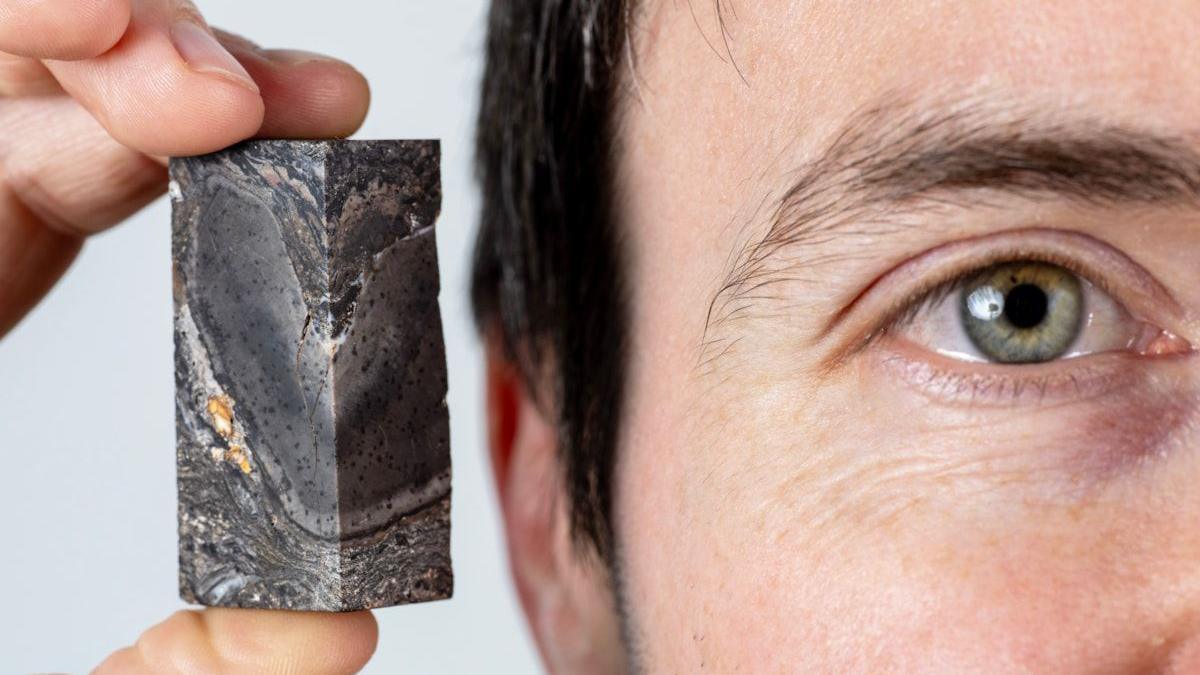
410-Million-Year-Old Prototaxites Fossil Joins National Museums Scotland Collection
In a groundbreaking discovery, a 410-million-year-old fossil of Prototaxites, a giant prehistoric organism, has been unearthed in Aberdeenshire, Scotland. The fossil, measuring an impressive 26 feet (8 meters) in height, was discovered near the village of Rhynie and has now been added to the collections of National Museums Scotland (NMS).
Unveiling an Ancient Organism
Prototaxites once dominated the landscapes of north-east Scotland, towering over other plants and animals of its time. Once believed to be a form of fungus, recent scientific research suggests that Prototaxites represents a distinct evolutionary branch of life that is now extinct. The discovery of this fossil in the Rhynie chert, a sedimentary deposit known for its rich palaeontological significance, provides further evidence supporting this theory.
Scientific Significance
Dr Sandy Hetherington, co-lead author of a new research paper and senior lecturer in biological sciences at the University of Edinburgh, emphasized the importance of the find. She stated, "It's really exciting to make a major step forward in the debate over Prototaxites, which has been going on for around 165 years. They are life, but not as we now know it, displaying anatomical and chemical characteristics distinct from fungal or plant life, and therefore belonging to an entirely extinct evolutionary branch of life."
The fossilized sample discovered in Aberdeenshire backs up the theory that Prototaxites were an entirely different form of life not found on Earth today. This discovery adds to the growing body of evidence that challenges previous assumptions about the nature of these ancient organisms.
Museum Collection and Future Research
The fossil will be kept and cared for at the NMS collection center in Edinburgh. Dr Nick Fraser, keeper of natural sciences at NMS, expressed the museum's delight in adding the fossil to its collections. He noted that the museum's collections "document Scotland's extraordinary place in the story of our natural world over billions of years to the present day."
The Value of Museum Collections
Dr Fraser further highlighted the importance of museum collections in cutting-edge research. He said, "This study shows the value of museum collections in cutting-edge research as specimens collected over time are cared for and made available for study for direct comparison or through the use of new technologies."
The inclusion of this fossil in the national collection is expected to inspire further research into the evolution of life on Earth and the unique characteristics of Prototaxites. The discovery also underscores the significance of the Rhynie chert as a site for palaeontological research, with its rich deposits of ancient fossils.
The Rhynie Chert: A Window into the Past
The Rhynie chert is renowned for its well-preserved fossils, which offer a glimpse into the ecosystems of the early Devonian period. The area has yielded numerous discoveries that have contributed to our understanding of ancient life, making it a critical site for researchers in palaeontology and evolutionary biology.
Local Landowner's Discovery
The Prototaxites fossil was discovered by a local landowner, whose keen observation led to this significant find. The discovery underscores the importance of citizen scientists and local communities in advancing scientific knowledge. The landowner's contribution to the field of palaeontology is a testament to the collective effort involved in uncovering the mysteries of our planet's past.
Implications for Understanding Evolution
The study of Prototaxites and similar ancient organisms provides valuable insights into the evolution of life on Earth. By analyzing the anatomical and chemical characteristics of these fossils, scientists can better understand the diverse forms of life that existed millions of years ago and how they adapted to their environments.
Distinct Evolutionary Branch
The findings suggest that Prototaxites represents a unique evolutionary branch that has no living descendants today. This discovery challenges previous assumptions about the diversity of life in ancient ecosystems and highlights the need for continued research into the origins and evolution of life on our planet.
Conclusion
The addition of the Prototaxites fossil to the National Museums Scotland collection marks a significant milestone in the study of ancient life. This discovery not only enriches our understanding of Scotland's natural history but also contributes to global knowledge about the evolution of life on Earth. As scientists continue to analyze and interpret these ancient fossils, we move closer to unraveling the mysteries of our planet's distant past.
Looking Ahead
The future of palaeontological research in Scotland looks promising, with the Rhynie chert and other sites offering a wealth of opportunities for discovery. The inclusion of this Prototaxites fossil in the national collection is just the beginning of what promises to be an exciting chapter in the study of ancient life.