Winter Olympics Sees Ski Jumpers Disqualified Over Equipment Violations
The thrill of the Winter Olympics often comes with stringent rules designed to ensure fair competition. However, for two prominent ski jumpers, the pursuit of perfection has led to unexpected disappointment. Austrian ski jumper Daniel Tschofenig and American athlete Annika Belshaw have both been disqualified from their respective events due to violations concerning their equipment, highlighting the critical importance of adhering to precise regulations in elite sports.
Tschofenig's 'Extremely Stupid' Boot Blunder
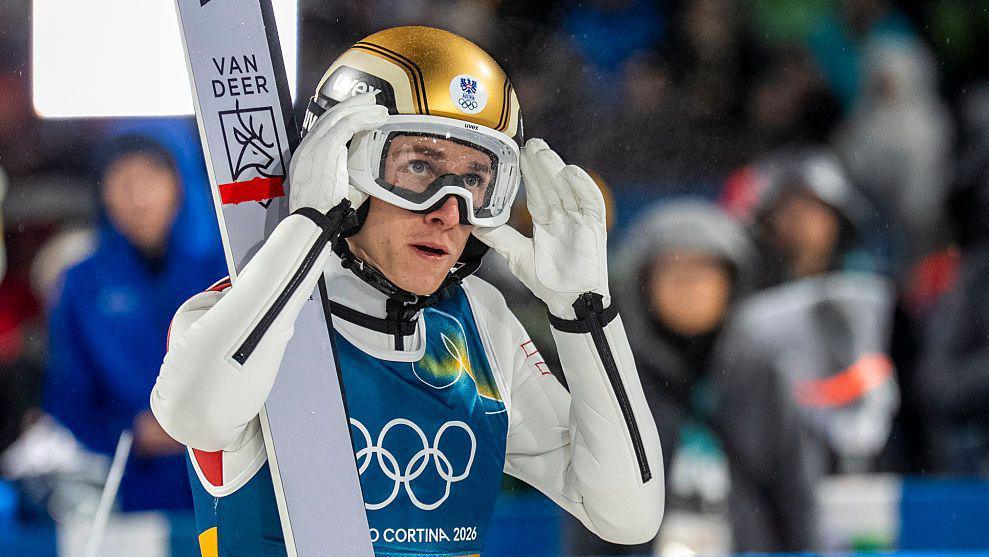
Daniel Tschofenig, a highly-rated 23-year-old Austrian ski jumper and a former World Cup champion, found his Winter Olympics medal aspirations dashed after being disqualified from the men's large hill individual event. The cause of his downfall? Oversized ski boots. Tschofenig had successfully navigated the qualification rounds, but a post-qualification equipment check revealed that his boots were four millimetres larger than the maximum permitted size according to international ski jumping regulations.
Speaking after the disqualification, a visibly dejected Tschofenig admitted to feeling "extremely stupid." He explained that he had been using new boots during training sessions, which he hadn't been entirely happy with. In the heat of the moment and amidst the pressures of the competition, he confessed to a lapse in diligence.
"Unfortunately, I was naive and didn't measure it. Extremely stupid of me, there was just so much stress going on. But rules are rules," Tschofenig stated. His disqualification meant that his first-round score of 137.7 points was nullified, effectively ending his participation in the event. This unfortunate turn of events also opened up a spot in the final for Slovakia's Hektor Kapustik.
The gold medal in the men's large hill individual event ultimately went to Slovenia's Domen Prevc, with Japan's Ren Nikaido securing the silver medal and Poland's Kacper Tomasiak claiming the bronze. Tschofenig's disqualification serves as a stark reminder that even minor deviations from equipment specifications can have significant consequences at the highest level of sport.
Belshaw Joins Tschofenig in Disqualification Line-up
The drama surrounding equipment violations did not end with Tschofenig. Just a day later, USA ski jumper Annika Belshaw also faced disqualification from the women's large hill individual event. Similar to Tschofenig, the 23-year-old athlete had qualified for the final but was subsequently ruled out due to her equipment.
Belshaw's infraction involved her skis, which were found to be more than one centimetre too long for the competition's regulations. The ruling meant she was also unable to compete in the final, adding another layer of disappointment to the ski jumping discipline.
The Intricacies of Ski Jumping Regulations
The rules governing ski jumping equipment are meticulously detailed and are overseen by the International Ski Federation (FIS). These regulations cover a wide range of parameters, including the length and width of skis, the size and design of suits, and, as seen in Tschofenig's case, the dimensions of boots. The primary objective of these rules is to create a level playing field, preventing athletes from gaining an unfair advantage through technological or design innovations in their gear.
For instance, ski length is often determined by an athlete's body mass index (BMI), aiming to prevent jumpers from using excessively long skis, which could theoretically provide more lift and aerodynamic advantage. Similarly, suit regulations focus on material, permeability, and fit to avoid creating 'wings' that could enhance flight distance.
The boot regulations, while perhaps less commonly discussed, are equally crucial. Boots are a fundamental connection between the jumper and their skis, influencing balance, control, and the transfer of energy. Even a few millimetres can impact the precise positioning and stability of the athlete during their jump, approach, and landing.
Broader Context and Athlete Reactions
These disqualifications come amidst a backdrop of heightened scrutiny on athlete equipment and performance enhancement. Recent reports have touched upon unusual methods athletes might employ to gain an edge, including unsubstantiated claims about injections to alter body measurements. While such reports remain in the realm of speculation, the Tschofenig and Belshaw cases underscore that even seemingly minor equipment details are subject to strict enforcement.
The reactions from both Tschofenig and Belshaw, characterized by their acceptance of the rules despite their personal disappointment, reflect a professional approach to the sport. The sentiment of "rules are rules" is a common refrain in competitive athletics, emphasizing that adherence to the established framework is paramount, regardless of the individual cost.
For Team GB and other national delegations, these incidents serve as a crucial reminder for pre-competition checks and athlete education. Ensuring that all equipment conforms to the latest FIS regulations is a vital part of preparation, preventing similar unfortunate outcomes and allowing athletes to focus on their performance rather than potential technical infringements.
As the Winter Olympics continue, the focus will undoubtedly remain on the athletes' performances. However, these disqualifications serve as a compelling narrative thread, highlighting the intricate balance between athletic prowess and the unwavering adherence to the rules that govern the spirit and integrity of international sport.

