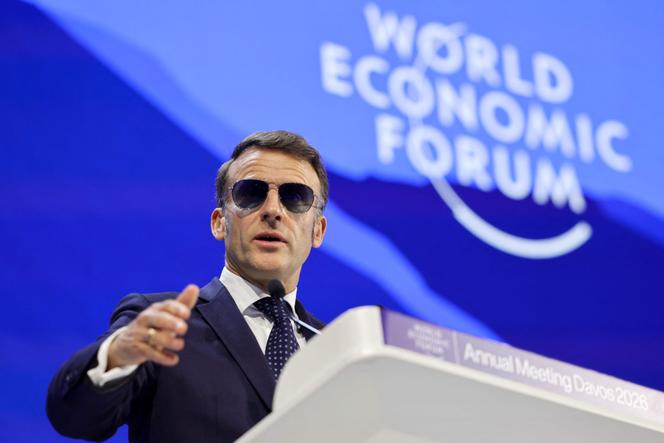
Mark Carney Declares End of U.S.-Led Global Order in Davos Speech
In a provocative speech delivered at the World Economic Forum in Davos, Switzerland, Canadian Prime Minister Mark Carney delivered a stark message: the era of the U.S.-led, rules-based international order is over. Carney argued that great powers are now weaponizing economic integration and called on countries like Canada to build strategic autonomy and resist coercion.
A New Global Reality
"The old order is not coming back," Carney stated unequivocally. He explained that the long-standing assumption that geography and alliance memberships automatically guaranteed prosperity and security is no longer valid. In this new dynamic, countries must be "principled and pragmatic" and take steps to protect themselves.
Economic Integration as a Weapon
Without directly naming U.S. President Donald Trump, Carney accused "great powers" of using economic integration as "weapons." This shift has diminished the role of multilateral institutions like the World Trade Organization, the United Nations, and the Conference of the Parties (COP) for climate talks. As a result, countries may need to rely more on themselves and less on international cooperation.
The Need for Strategic Autonomy
Carney emphasized the importance of strategic autonomy in areas such as energy, food, critical minerals, finance, and supply chains. He argued that a country that cannot feed itself, fuel itself, or defend itself has few options. "When the rules no longer protect you, you must protect yourself," Carney said.
Middle Powers Must Adapt
Carney acknowledged that this more isolationist approach will make countries poorer, fragile, and less sustainable. However, he argued that it is a necessary adjustment to the new global reality. Middle powers like Canada must work with like-minded allies where possible to push back against domination by larger, wealthier, and well-armed countries.
Building Coalitions
"This is not naive multilateralism. Nor is it relying on diminished institutions," Carney explained. "It is building the coalitions that work, issue by issue, with partners who share enough common ground to act together. Middle powers must act together because if you are not at the table, you are on the menu."
Canada's Actions
Since taking office, Carney has taken steps to position Canada for this new era. He has doubled defence spending, rapidly diversified trade by signing 12 trade and security deals on four continents in six months, and drawn closer to the European Union. He also recently secured a trade deal with China on electric vehicles and farm products.
A New Path Forward
Carney concluded his speech by calling for a "world of fortresses" to be avoided. Instead, he urged countries to work together where possible and build something better, stronger, and more just from the fracture. "We are engaging broadly, strategically, with open eyes. We actively take on the world as it is, not wait for the world as we wish it to be," he said.
Implications for Global Politics
Carney's speech signals a significant shift in Canadian foreign policy and has implications for global politics. It reflects a growing awareness among middle powers that the old rules-based order is crumbling and that they need to adapt to a more volatile and unpredictable world.
The Role of the U.S.
While Carney did not explicitly name the U.S., his comments suggest a growing disillusionment with U.S. leadership on the global stage. This could have significant implications for U.S.-Canada relations and the broader Western alliance.
Conclusion
Mark Carney's speech at Davos is a wake-up call for the world. It highlights the need for countries to adapt to a new global reality where the old rules no longer apply. As the international order continues to evolve, it remains to be seen how countries will respond to this challenge.