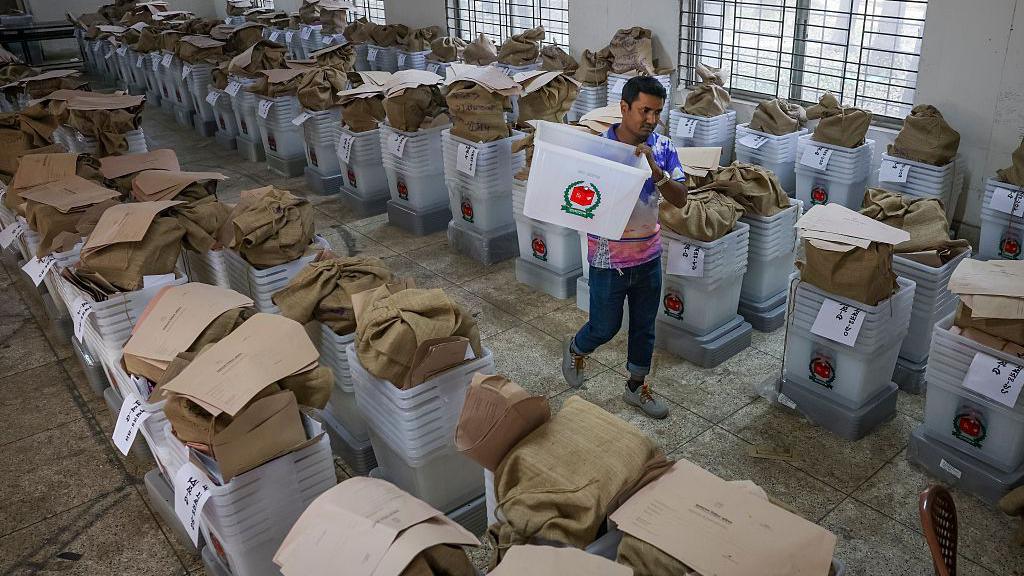
Bangladesh Election: First Vote Post-Hasina Ouster
Bangladesh is at a crossroads today as voters head to the polls in the country's first election since the dramatic ouster of long-time Prime Minister Sheikh Hasina in 2024. This monumental vote, occurring on a single day alongside a constitutional referendum, marks a pivotal moment in the nation's turbulent political history. With the Awami League banned from participation, the contest pits the Bangladesh Nationalist Party (BNP) against the Islamist Jamaat-e-Islami, which has allied with a new party emerging from the student-led uprising. An interim government under Nobel Peace Prize winner Muhammad Yunus has steered the country through this transition, but the outcome could redefine Bangladesh's governance for generations.
Background: The Uprising That Changed Everything
The story begins with widespread Gen Z-led protests in mid-2024, sparked by frustrations over job quotas, corruption, and authoritarianism under Hasina's 15-year rule. What started as student demonstrations escalated into a nationwide revolt, resulting in up to 1,400 deaths during a brutal crackdown. Hasina, accused of directly ordering the violence—a charge she vehemently denies—fled the country amid the chaos. Her exile to India marked the end of an era dominated by the Awami League's iron grip on power.
In November 2024, a Bangladeshi court sentenced Hasina to death for crimes against humanity related to the protest suppression, further cementing her fall from grace. The Awami League, once a powerhouse, now faces a ban from the elections, leaving a vacuum filled by opposition forces. Yunus's interim administration, installed post-uprising, has focused on stabilizing the economy and preparing for democratic renewal. However, challenges like economic woes, inflation, and communal tensions linger, influencing voter priorities.
The Key Players in the Race
The BNP, led by figures like Khaleda Zia's son Tarique Rahman (in exile), positions itself as the moderate, secular alternative championing economic recovery and anti-corruption measures. Long rivals to Hasina's regime, they promise a return to balanced governance. On the other side, Jamaat-e-Islami, an Islamist party with roots in the 1971 liberation war controversies, has forged an unlikely alliance with the National Citizen Party (NCP), born from the student protests. This coalition appeals to youth disillusioned by secular failures, blending calls for Islamic values with demands for accountability.
Early reports from Dhaka show steady voter turnout, with queues forming at polling stations despite security concerns. BBC interviews reveal mixed hopes: many young voters seek jobs and justice, while older demographics worry about stability. "We want a government that listens, not one that shoots," one student told reporters, echoing the uprising's raw energy.
The Unprecedented Referendum: July Charter at Stake
Adding complexity to the day is the simultaneous referendum on the July Charter, a sweeping set of 84 reforms proposed by Yunus's government. This document aims to dismantle the executive overreach that enabled Hasina's autocracy, introducing checks and balances like a bicameral parliament—an upper and lower house—to prevent future power concentrations. It outlines institutional roles, mandates anti-corruption bodies, and binds any new government to implement these changes if approved.
A 'yes' vote would legally compel the elected parliament to enact the charter fully, fostering a more decentralized democracy. A 'no' would leave reforms to the whims of the ruling party, risking a return to old patterns. Experts like Ali Riaz, who advised on the process, describe this dual-ballot setup as "unprecedented" in Bangladesh's history. Unlike the 1991 referendum on shifting to a parliamentary system—which saw just 35% turnout—this one combines electoral and plebiscite elements under tight timelines, driven by the need to wrap up before Ramadan and monsoons.
Challenges and Voter Confusion
Yet, the ambition carries risks. Rural voters, in particular, express confusion over the two ballots. "One for leaders, one for rules—which is which?" asked a farmer in a BBC report. Analysts from the Bangladesh Policy Research Institute warn that poor execution could lead to low participation or invalid votes, undermining legitimacy. Shafqat Munir notes the mechanics remain unclear to many, potentially translating uncertainty into apathy.
Urban areas, however, buzz with engagement. Videos show enthusiastic crowds, with BNP leaders arriving to vote amid cheers. Three core issues dominate conversations: economic revival post-uprising turmoil, justice for protest victims, and safeguarding minority rights in a polarized landscape. The referendum's fate could either empower institutions or expose fractures in this fragile transition.
Implications for Bangladesh's Future
If the BNP emerges victorious, expect a focus on international alliances and market reforms to attract foreign investment, vital for a nation grappling with garment industry slumps. A Jamaat-NCP win might tilt toward social welfare infused with conservative policies, raising secular concerns but energizing the youth base. Regardless, the election's success hinges on peaceful conduct; past polls under Hasina were marred by rigging allegations.
Yunus, the microfinance pioneer, steps back after this vote, his legacy tied to this democratic experiment. As Bangladesh—home to 170 million—navigates climate vulnerabilities and regional geopolitics, today's polls could stabilize or destabilize South Asia's dynamics. With India watching closely due to Hasina's refuge there, and global eyes on Islamist gains, the world awaits results that might inspire or caution other transitioning democracies.
In essence, this election isn't just about seats in parliament; it's a referendum on rebirth. Will Bangladesh embrace inclusive reforms, or slip back into division? As ballots are cast, the nation's resilient spirit shines through the uncertainty.